
July 5, 2026 · 7 min read
How often to diffuse essential oils safely
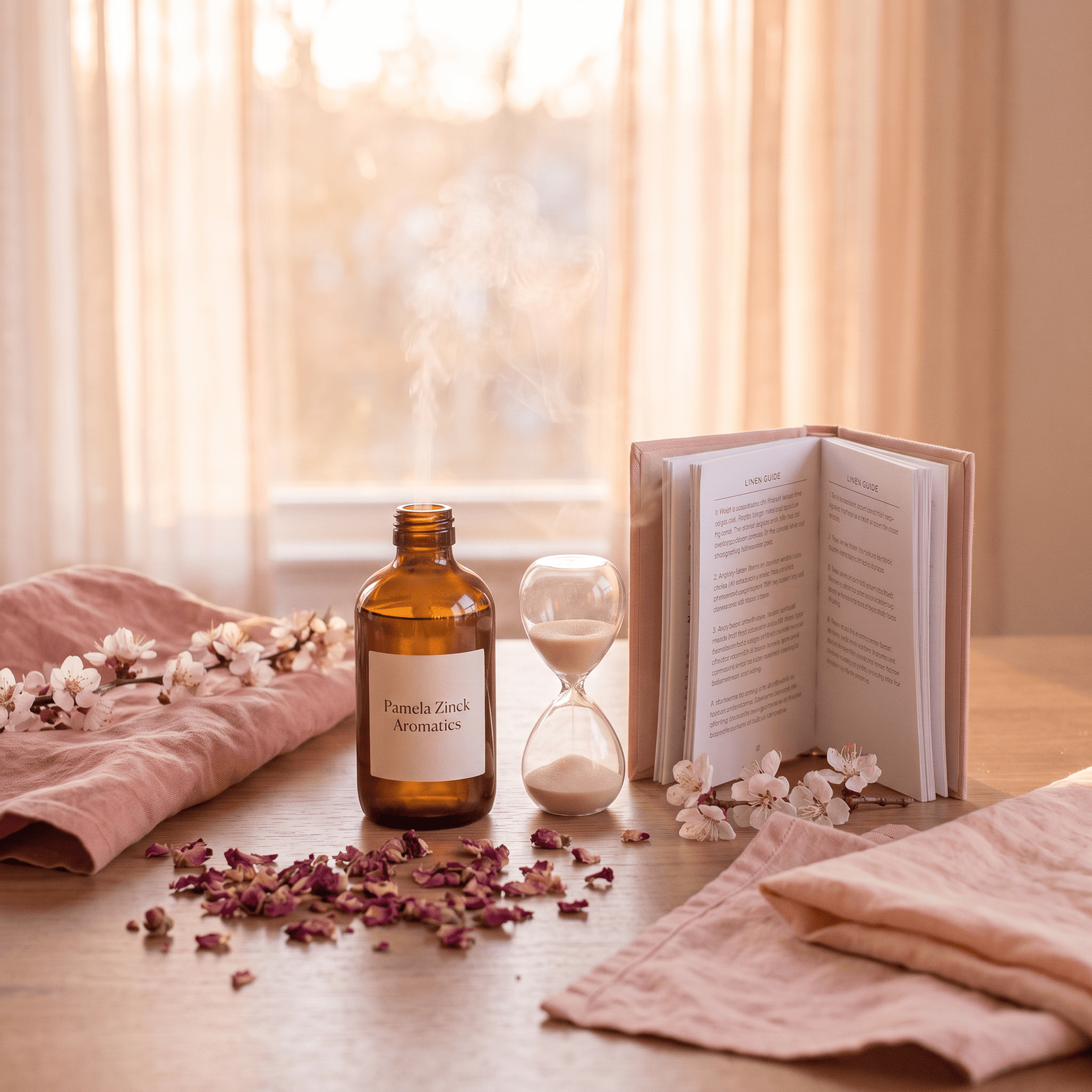
The instinct with a new diffuser is to run it constantly, because if a little is pleasant then surely more is better. Diffusing is one of the clearest cases where that logic fails. The useful dose is short and intermittent, and the difference between a room that feels calm and a room that feels heavy is almost entirely a question of run time.
Start with the physiology. Olfactory adaptation means your nose stops registering a constant, unchanging scent within roughly fifteen to twenty minutes. You are still inhaling the material. You simply cannot smell it any more. So the second hour of continuous diffusing delivers no perceptible benefit while still loading the air, emptying the bottle, and increasing the chance of a headache or throat irritation for you and for anyone else in the house.
A sensible default is twenty to thirty minutes on, then at least sixty minutes off. Two or three of those cycles across a day is plenty for most rooms and most people. If your diffuser has an intermittent mode that runs thirty seconds on and thirty seconds off, that is an entirely reasonable way to stretch a session, and it uses noticeably less oil.
Room size drives drop count more than anything else. A small bedroom or a home office of roughly ten square metres wants three to four drops. A living room of twenty five square metres can take five to seven. An open plan space is a harder problem, because the material disperses rather than concentrating, and the honest answer is that a diffuser is the wrong tool for scenting a very large area. Position it near where you actually sit rather than in the geometric centre of the room.
Ventilation is the other half of the equation and it is routinely ignored. A closed room with no air exchange accumulates. Cracking a window or leaving an internal door open does not defeat the purpose. It keeps the concentration in the range where the scent stays pleasant rather than becoming saturating. If you walk out of a room and back into it and the first breath is startling, the room is too heavy.
Overnight diffusing is the question that comes up most. I would not do it, and the reasoning is straightforward. Six to eight hours of continuous exposure in a closed bedroom is a long dose delivered while you are unable to notice discomfort or move away. If a sleep blend is part of your evening, run the diffuser for thirty minutes before you get into bed and switch it off. The room will still smell of it. A roller on the wrists handles the rest of the night at a fraction of the exposure.
Who needs a shorter session than the default. Anyone with asthma or reactive airways, since aerosolised material can trigger a response even at low concentration. Infants and very young children, where the sensible approach is short sessions in a room they are not currently in, followed by ventilation. Older adults with respiratory conditions. And anyone recovering from a respiratory illness, whose airways are already irritated.
Pets change the calculation and deserve their own attention. Cats in particular lack an efficient liver pathway for metabolising certain compounds, and birds have respiratory systems so sensitive that scented air is a genuine hazard rather than a caution. If animals share the space, keep sessions short, keep a door open so they can leave, and keep the diffuser out of reach and off the floor.
Which oils are more demanding at the same drop count. Peppermint, eucalyptus, and the strong menthol and cineole materials read as much stronger in air than their drop count suggests and are worth halving. Citrus disperses quickly and disappears quickly, so it often feels like it needs more when the real answer is a base note to hold it. Woods and resins linger, so three drops of cedarwood can outlast six drops of lemon.
Maintenance affects safety more than people expect. Water sitting in a reservoir grows things, and old oil residue oxidises into material you did not intend to inhale. Empty the reservoir after each session rather than leaving water in it overnight. Wipe it dry. Once a week, run a cycle with water and a splash of white vinegar, then rinse. A cloudy or filmy reservoir is a sign it is overdue.
Use distilled or filtered water if your area has hard water, because mineral scale reduces the output of an ultrasonic disc and shortens the life of the unit. And do not put a carrier oil or a pre diluted roller blend into an ultrasonic diffuser. It is designed for water and undiluted essential oil, and carrier oil will gum the mechanism.
The practical summary is short. Three to five drops, twenty to thirty minutes, a door or window open, off overnight, reservoir emptied afterwards, and no more than two or three sessions a day. That routine keeps the scent noticeable, keeps the exposure sensible, and makes a bottle last several months instead of several weeks.